


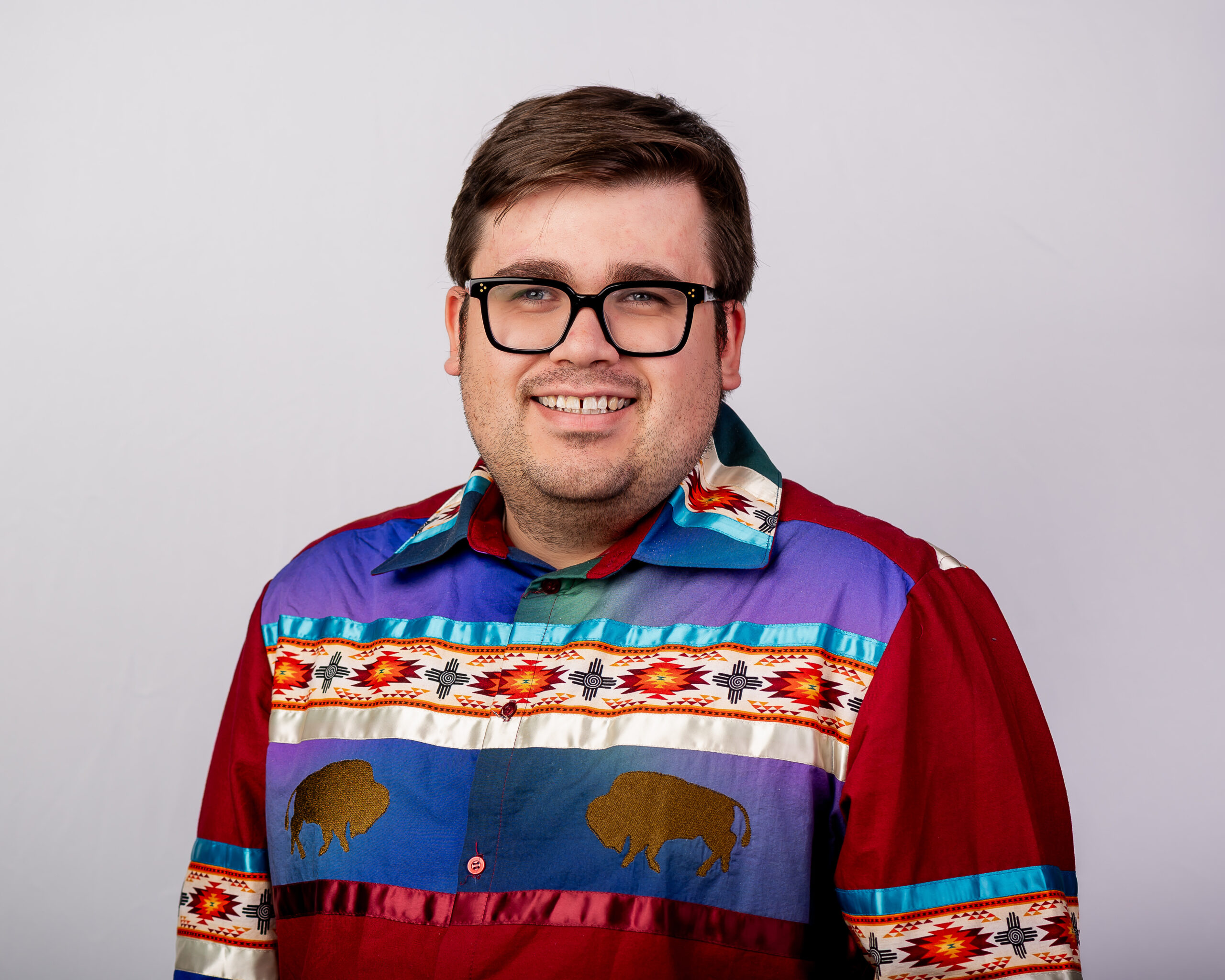
Cameron Adams
2017 TFHA Alum
Current Position
Consultant, Indigenous Languages, Government of Manitoba
“If better is possible, then good isn’t good enough.”
Cameron Adams in conversation with the Terry Fox Humanitarian Award on learning, leadership, and language revitalization
National Indigenous Peoples Day is a time to honour the strength, diversity, and living cultures of First Nations, Inuit, and Métis peoples across Canada. It is also a moment to recognize the leaders helping carry those languages, stories, and teachings forward.
Cameron Adams is a Swampy Cree and Ojibwe language advocate, academic researcher, and 2017 Terry Fox Humanitarian Award recipient. Over the past decade, his work has focused on Indigenous language revitalization through education, technology, research, and government strategy. He currently leads Manitoba’s K–12 Indigenous Languages Strategy and continues to advance work in Swampy Cree (nēhinawēwin) language learning and reclamation.
In this conversation with Terry Fox Humanitarian Award, Cameron reflects on his journey, the evolving field of language revitalization, and what it means to build a future where Indigenous languages are lived on the daily.
TFHA: Tell us a bit about your story and your journey.
Cameron Adams: Over the last decade, I’ve been working to learn my own language, Swampy Cree, which comes from north-central Manitoba.
My family roots are from Norway House, and I’m a member of Berens River First Nation. I’m both Ojibwe and Cree through my grandmother, and I also have French Canadian, Scottish, English, and Métis ancestry through my family.
I started seriously learning Cree around 2015–2016, and that journey continued through high school and into university at the University of Winnipeg. During my undergrad, I helped develop a Swampy Cree language app and took part in language classes and learning initiatives wherever I could.
That experience shaped everything that came after.
In 2023, I began my Master of Arts in Indigenous Language Revitalization at McGill University. My research focused on mobilizing archival materials – things like Bibles and hymn books –as tools for language reclamation. These materials were originally created with different intentions, but today they can be repurposed to help reclaim languages one word at a time.
More broadly, I focus on language documentation, second-language learning, and how we build effective pathways for people to become speakers again.
Today, I lead Manitoba’s K–12 Indigenous Languages Strategy, working with fluent speakers of all nine Indigenous languages in the province to help shape the future of language education.
TFHA: What does National Indigenous Peoples Day mean to you?
Cameron Adams: It’s an important moment to celebrate Indigenous excellence, identity, and resilience.
We often reflect on difficult histories, and that’s important, but this day also allows space to recognize what is thriving. Across Canada, nearly 90 Indigenous languages are still spoken. Some, like Wendat, are being spoken again after generations of silence. Others, like Pentlatch in British Columbia, are being reclaimed and revitalized.
There is real momentum happening.
In Manitoba, for example, new Bachelor of Arts immersion programs in Ojibwe and Swampy Cree were recently launched to train the next generation of language teachers. These kinds of initiatives matter because they create pathways for languages to live beyond the classroom.
Indigenous languages don’t only belong in schools. They belong in homes, communities, workplaces…everyday life.
At its core, this movement is about more than language. It’s about restoring space for identity, culture, and belonging.
TFHA: What has changed in the field of Indigenous language revitalization over the past decade?
Cameron Adams: The shift has been significant.
When I started, the field was still emerging. Now, Indigenous language revitalization is recognized across universities, governments, and communities as a legitimate and growing area of study and work.
There are undergraduate, graduate, and PhD programs focused on it. It has become a real career path; people can build livelihoods in this space.
At the same time, there is still a lot of work to do. Some languages have fewer than 20 fluent speakers, while others have thousands. The level of urgency varies dramatically, but the responsibility is shared.
One thing I often think about is a quote I learned in high school: “If better is possible, then good isn’t good enough.”
That idea applies directly here. We need to continually raise the standard, because many of our most fluent speakers are in their final generations. We owe them our best effort – not just to preserve languages, but to ensure they continue.
TFHA: What advice would you give to young people learning their language?
Cameron Adams: If you want your language, you have to pursue it with intention. You have to be willing to learn it and work for it.
The best place to start is with yourself – your commitment, your discipline, your curiosity. But long-term success comes from building community around you.
That might mean learning from Elders, joining classes, finding online spaces, or even helping create a learning community if one doesn’t exist yet.
Most Indigenous languages in Canada have learners today. The key is finding your place within that movement and contributing to it.
TFHA: How has community support for language learners changed?
Cameron Adams: There has been a real shift.
Today, there is much more encouragement for learners, even when they make mistakes. That wasn’t always the case.
I still don’t always have many fluent speakers physically around me day to day, so in many ways, you do have to build your own learning environment. But the attitude has changed. There is more openness, more support, and more recognition that learners are essential to revitalization.
That change is encouraging – and necessary.
TFHA: What does meaningful language revitalization look like in practice?
Cameron Adams: It means expanding where language lives.
Schools are important, but they are only one domain. Language also needs to exist in homes, businesses, public spaces, and community life.
If we limit language to classrooms, it stays confined. But if we bring it into everyday spaces (grocery stores, workplaces, social settings), it becomes real again.
Revitalization is about creating those domains of use where language can be lived, not just learned.
TFHA: What are you most hopeful about for the future?
Cameron Adams: The biggest shift I want to see is systemic change.
Right now, Indigenous language revitalization is largely supported through goodwill and programming. But it is not yet consistently enforced through legislation in a meaningful way.
We need stronger legal frameworks that make language rights enforceable – similar to how English and French are protected in Canada.
Without that, progress depends too heavily on individual effort and short-term initiatives. With it, we create accountability and long-term sustainability.
This is not about replacing what exists…it’s about ensuring Indigenous languages are fully included in the systems that shape this country.
And I think that change is not only necessary – it’s possible.