


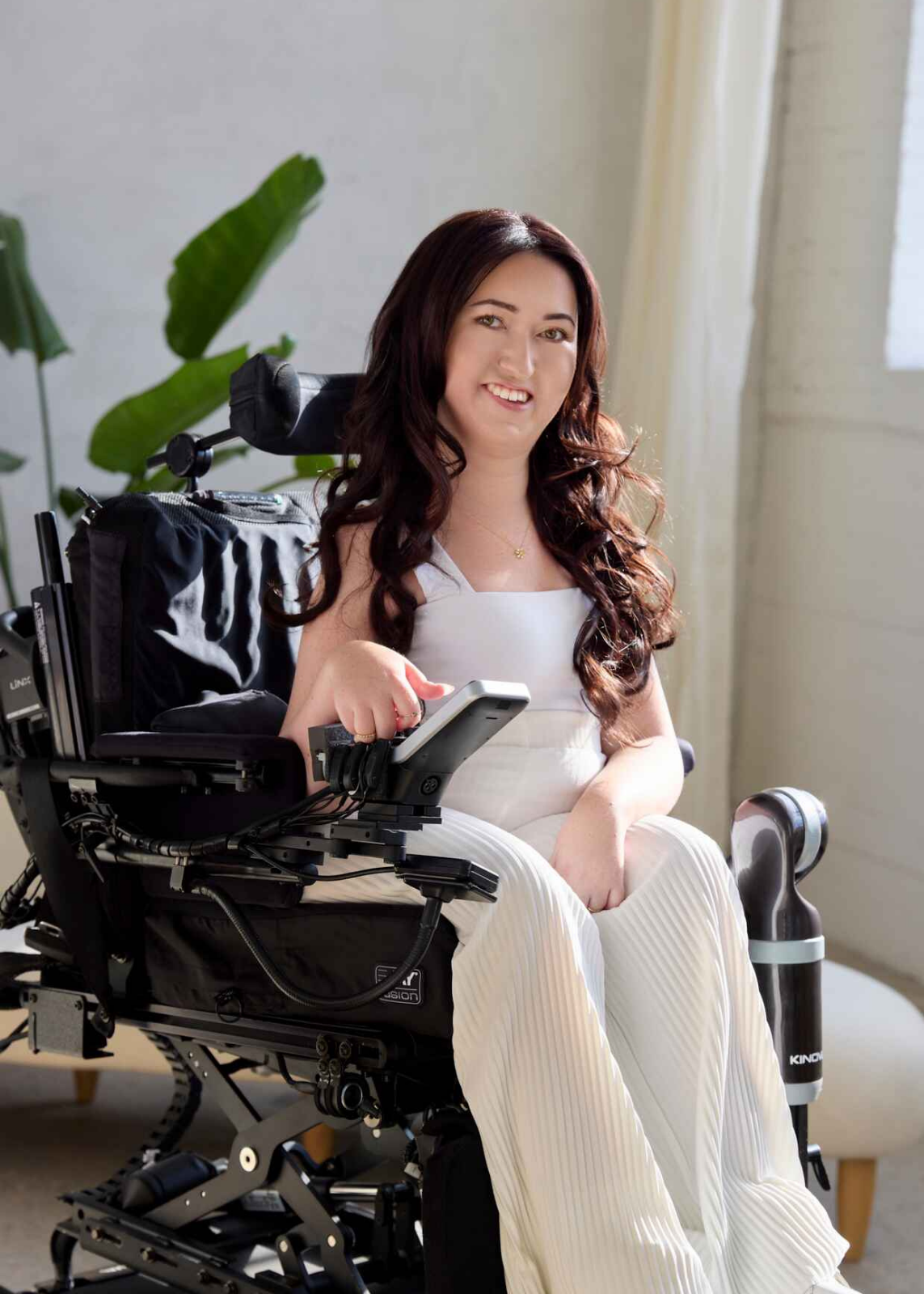
“Disability isn’t one story. It’s a full, complex life, just like anyone else’s.”
Tori Hunter in conversation with the Terry Fox Humanitarian Award on community, inclusion, and living without limits.
Tori Hunter is proving that accessibility doesn’t limit adventure, it expands it. A disabled entrepreneur, talent agent, and content creator, Tori has transformed her personal experiences into a platform that celebrates accessible travel, career growth, and authentic storytelling. Through her advocacy and openness, she’s empowering others to challenge barriers, embrace possibility, and see disability through a new lens.
In this conversation with Terry Fox Humanitarian Award, Tori reflects on her journey as a disability advocate, the importance of inclusive design, and what it means to create a world where accessibility, opportunity, and belonging are within reach for everyone.
TFHA: Tori, how did receiving the Terry Fox Humanitarian Award shape your understanding of humanitarian work?
Tori Hunter: The Terry Fox Humanitarian Award played a pivotal role in my advocacy journey. It gave me the financial freedom to focus on disability advocacy while balancing university and the realities of living with Spinal Muscular Atrophy.
Before university, much of my advocacy centered on raising funds for treatments and a cure for SMA. But once I connected with people from across the disability community, my perspective shifted. I began to see that advocacy wasn’t just about changing our bodies – it was about changing the world around us.
The award gave me the opportunity to embrace that broader vision. I joined advocacy groups, became more involved in the disability community, and focused on creating a more accessible and inclusive world for people living with disabilities. I truly don’t think I’d be where I am today without that support.
TFHA: Your content explores accessible travel, work, and everyday life through your own experiences. How do you balance sharing the challenges of living with a disability while also showing the joy, ambition, and fullness of your life?
Tori Hunter: It’s something I think about all the time.
I never want to minimize the realities of living in a world that isn’t always accessible. There are physical barriers, gaps in care, and systems that still have a long way to go. Those experiences deserve to be talked about.
At the same time, I don’t want disability to be defined only by struggle. My life is full of adventure, purpose, friendships, and joy.
So I try to show all of it. Some days that means talking about the barriers. Other days it’s celebrating what’s possible. Disability isn’t one story – it’s a full, complex life, just like anyone else’s. That’s the perspective I hope people take away from my work.
TFHA: What keeps you creating, even on the days when advocacy feels exhausting?
Tori Hunter: Seeing real change.
A few years ago, I shared a video after being carried off a plane in Costa Rica in a broken aisle chair. It was an unsafe experience for everyone involved. I posted it simply because I wanted people to understand what many wheelchair users face when they travel.
The response was overwhelming. Millions of people watched the video, it sparked national conversations, and the airport reached out to ask how they could do better. They ordered safer accessibility equipment, meaning future travelers wouldn’t have to experience what I did.
Moments like that remind me why this work matters.
Social media has the power to turn awareness into action. When people understand the barriers disabled people face, they’re often willing to help solve them. Accessibility isn’t impossible; it just takes listening, creativity, and a willingness to do better.
Advocacy can be exhausting, especially while managing my own health. But every time sharing my story leads to even one meaningful change, it reminds me that it’s worth it.
TFHA: What has the disability community taught you through your work and the relationships you’ve built?
Tori Hunter: It’s taught me that there is no single definition of accessibility.
Growing up, I mostly knew other people with Spinal Muscular Atrophy. But through social media and my advocacy work, I’ve connected with people across the disability community…people who are blind, deaf, neurodivergent, and living with many different experiences.
What I’ve learned is that accessibility looks different for everyone. As a power wheelchair user, my needs are different from someone who uses a manual wheelchair, and both experiences are different from someone navigating the world with another type of disability.
That’s why listening matters. The more perspectives we include, the better we understand the barriers people face – and the better we can create solutions that work for more people.
TFHA: Why is inclusive design so important?
Tori Hunter: Because accessibility benefits everyone.
A ramp doesn’t just help someone using a wheelchair, it helps parents with strollers, travellers with luggage, delivery workers, seniors, and anyone who needs a more accessible path.
The same is true for automatic doors, accessible spaces, and thoughtful design. When we build with accessibility in mind, we create communities that are easier for everyone to navigate.
Accessibility isn’t about creating separate solutions for a few people. It’s about designing a world where more people can participate, belong, and thrive.
TFHA: What does Disability Pride mean to you, and what do you wish others understood about why it matters?
Tori Hunter: To me, Disability Pride is a celebration of community. Wherever someone is in their disability journey, I hope this month allows them to see disability from a different perspective – to see the possibility, connection, and joy that can exist within it. My experience is different from someone who became disabled later in life, just as my experience is different from someone else living with SMA. There is no single disability experience. For me, Disability Pride Month is about recognizing all those different journeys and finding moments of pride, joy, and belonging within them. It’s a reminder that disability is not defined only by challenges or what we overcome. It’s about celebrating the full lives we build – with our disabilities, not in spite of them. I also see Disability Pride Month as a time for the disability community to celebrate itself. It’s not just about raising awareness, it’s about recognizing our accomplishments, our identities, and the communities we’ve built.
TFHA: How can organizations move beyond celebrating resilience and create meaningful accessibility, inclusion, and empowerment?
Tori Hunter: I think genuine inclusion starts with who has a seat at the table. Organizations need to include people with lived experience, not just when making accessibility decisions, but throughout their teams, leadership, and decision-making processes. If an organization doesn’t have people who understand disability firsthand, it becomes much harder to create solutions that truly reflect the community they want to serve. The best accessibility initiatives come from listening to the people who live these experiences every day. Inclusion isn’t just about inviting people in…it’s about ensuring their voices are valued, heard, and helping shape the future.