


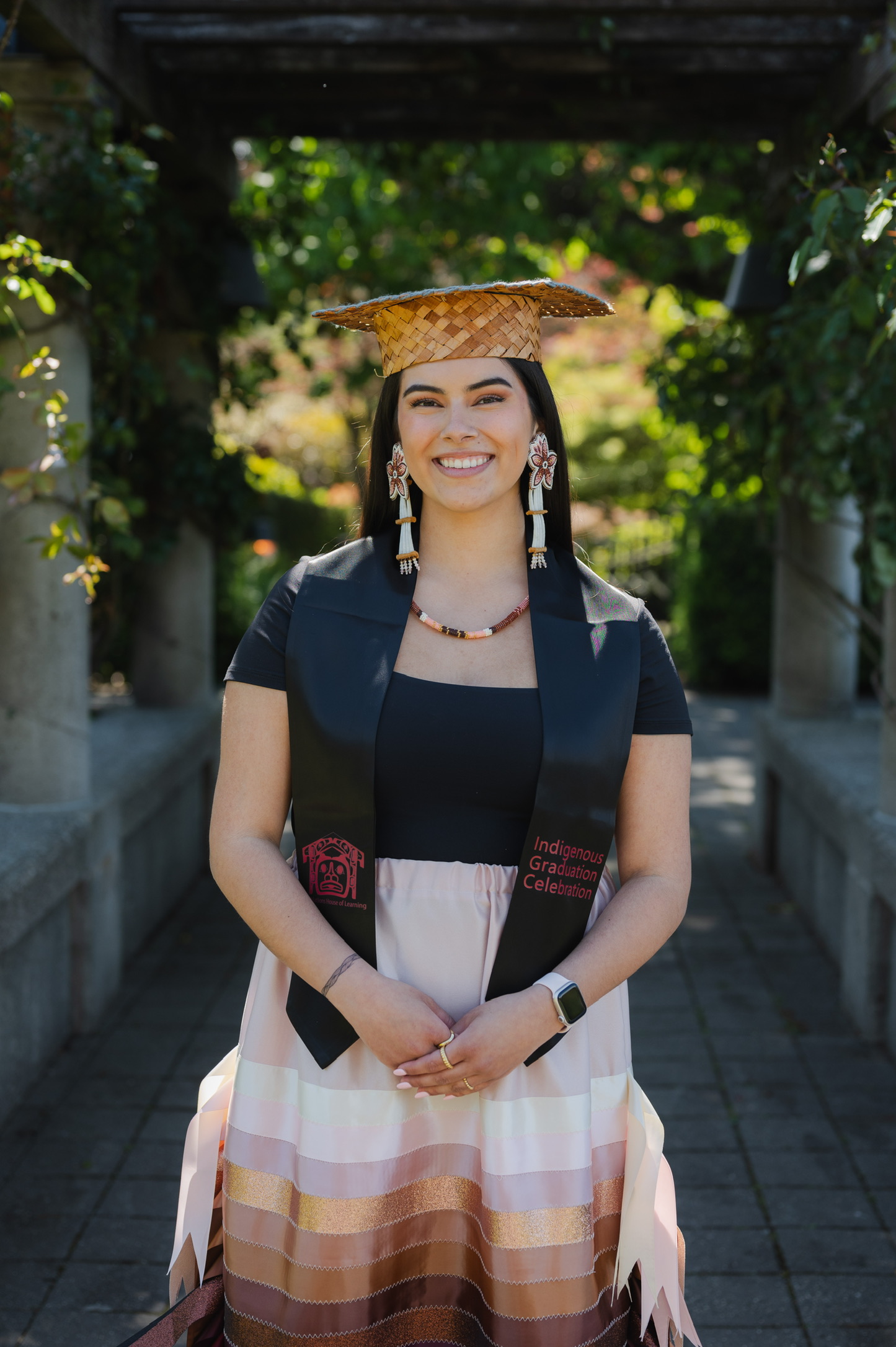
“Medicine needs you. Your experiences and your voice matter, regardless of where you grew up.”
Victoria McMahon in conversation with the Terry Fox Humanitarian Award on Indigenous health, culturally safe care, mentorship and turning experience into action.
For Victoria McMahon, medicine is personal. A sports injury and two ankle surgeries at SickKids opened her eyes to a future in healthcare. Today, the Deninu Kųę́ First Nation member is studying medicine in Sudbury, with a vision for healthcare that is timely, culturally safe and grounded in both Western and traditional medicine.
A 2019 Terry Fox Humanitarian Award recipient, Victoria credits the award with giving her the freedom to pursue her undergraduate studies at UBC and opportunities that eventually led to a master’s degree in the UK. Now, she’s paying that support forward through mentorship, advocacy and her commitment to Indigenous healthcare.
In this conversation with the Terry Fox Humanitarian Award, Victoria reflects on what Truth and Reconciliation means to her, why culturally safe care matters, what she hopes to bring to medicine, and the message she has for Indigenous youth considering a career in healthcare.
TFHA: What does National Day for Truth and Reconciliation represent for you, Victoria?
VICTORIA: National Day for Truth and Reconciliation is a heavy day for many of us, but it’s also a day for reflection and listening to the stories of residential school survivors. Their stories are real, and they need to be remembered and carried forward to generations to come.
Especially today, with the rise of residential school denialism. It’s more important than ever to hear from survivors and uplift Indigenous voices.
It’s also important to recognize Indigenous excellence and what Indigenous people are doing to improve our communities, health and well-being.
For me, it’s a day to connect with other Indigenous people, support people in our communities and think about future generations. We need to make sure they understand the importance of the day and the history behind it.
TFHA: Your own experience with healthcare played a big role in your decision to pursue medicine. What happened?
VICTORIA: Growing up, I was really interested in sports. That was kind of my whole life until I had a sports injury in high school.
When I had my two ankle surgeries at SickKids in Toronto, it opened my eyes to the world of academics and to the possibility of a career in medicine. My orthopedic surgeon, Dr. Lucas Murnaghan, was a huge inspiration. The qualities he showed as a healthcare provider made me realize that I wanted to be able to provide that kind of care to young people one day.
I honestly don’t think I would be in medical school today if it weren’t for those ankle injuries.
TFHA: What draws you to family medicine, particularly working with Indigenous communities?
VICTORIA: Becoming an Indigenous family physician really stood out to me because of the longitudinal care aspect. I want to build relationships with patients and continue those relationships throughout their lives.
I think about working in the ER, where you might not know what happens to your patients afterward. Having the ability to follow patients and work with families is really important to me.
I’m also interested in working with urban Indigenous communities. I grew up in an urban setting in Barrie, Ontario, so I would love the opportunity to work with other urban Indigenous youth and families.
TFHA: What does culturally safe care look like in practice?
VICTORIA: Many Indigenous people have experienced, or witnessed family members experiencing unfortunate circumstances when accessing the healthcare system. So being able to go to an appointment and know that you’re in a safe space – that you aren’t in fight-or-flight – is really comforting.
Indigenous primary care clinics can create that environment. They can offer traditional healers, Knowledge Keepers and traditional medicines alongside Western medicine.
During a one-month Indigenous community placement at my medical school, I had the opportunity to see how an Indigenous clinic operates and learn how traditional medicines and knowledge can work alongside Western healthcare. It was really beautiful to see Indigenous medicines, ceremonies and traditions being uplifted within a healthcare setting.
Cultural safety also means being able to trust your healthcare provider enough to be honest about the practices and medicines you’re using. Traditional medicines vary from community to community, and healthcare providers need to understand that. If patients don’t feel comfortable talking about those practices, there could be contradictions with other medications.
Building that trusting relationship is really important.
TFHA: What has mentorship meant to you as an Indigenous medical student?
VICTORIA: Connecting with other Indigenous medical learners in upper years, as well as residents and physicians, has been incredibly important and impactful.
Being able to see myself as a practicing physician and see how other Indigenous people practice medicine has helped me understand just how many different opportunities there are. Medicine can look very different from community to community and from coast to coast.
Mentorship has also been a big part of the change I’ve been able to create myself. When I was involved with the Indigenous student organizations at UBC, I would connect with incoming Indigenous students, tell them about resources and programs, and help them see what opportunities were available.
Being there as a mentor has been one of the most meaningful and rewarding things I’ve done through those organizations.
TFHA: You received the Terry Fox Humanitarian Award in 2019. What was the impact of winning such a prestigious award?
VICTORIA: I was obviously very surprised. I got a call from Terry’s brother, which was really cool.
Having my leadership qualities recognized was inspiring. It also put a little bit of pressure on me to keep going in that direction and to remember that my values and what was driving me were important to whatever career path I chose.
The award really opened doors for me. I wanted to go to UBC because of its Indigenous resources and large Indigenous community, and I wanted the experience of living somewhere new.
I had no family or friends in Vancouver. I was going there completely on my own. And because of the Terry Fox Humanitarian Award, I could do that without having to worry financially.
Everything that came afterward, including my master’s in the UK, really started with that opportunity. It allowed me to go far, take the next step in my education and gain confidence.
TFHA: What would you tell the younger version of yourself who applied for the award?
VICTORIA: I would tell her that the hard work will pay off.
When I look back, it seems like so long ago. I’m so happy I applied, and I’ve met so many incredible people and alumni through the program.
Everything I’ve accomplished since then is something I honestly never would have imagined. I dreamed about some of these things, but I didn’t think they would become reality.
So I’d tell her to keep going. The hard work will pay off.
TFHA: How does Terry’s legacy show up in the work you’re doing today?
VICTORIA: I think Terry’s legacy is about standing up for others and using your voice in a good way through advocacy
As a medical student working toward becoming a physician, I think that will be very important; being there for others and advocating for my patients.
Using my voice to uplift others is a skill I didn’t realize I had. But it’s something I’ve continued to develop throughout my life.
TFHA: What have you learned about how change actually happens?
VICTORIA: I think starting small is important, especially when you’re trying to create change without burning yourself out.
Building reciprocal relationships with people has been fundamental to where I am today. I’ve continued relationships with people I’ve met in Vancouver and elsewhere, and those connections have stayed important to me.
For me, change often happens on a small scale – individual to individual. It’s about working with people, building relationships and being there for someone.
TFHA: What would you say to a young Indigenous student considering medicine?
VICTORIA: You can do it! Medicine needs you – and your voice!
There are lots of barriers to medical school and becoming a physician, but there are also more pathways than people might realize. Many medical schools are moving away from the MCAT, which is a significant barrier, and there are Indigenous admission streams and different ways to enter medicine. Don’t underestimate yourself…there are opportunities out there. Leadership doesn’t fit into one box. It can look like many different things, and your experiences matter regardless of where you grew up.
Medicine needs you and your voice.
TFHA: What would your ideal healthcare system look like?
VICTORIA: I would want healthcare to be a culturally safe space for everyone.
In an ideal world, accessing traditional medicines would be as easy as accessing Western medicine. People would receive culturally competent care, be able to access care close to home and have timely access to specialists.
Most importantly, you could walk into a doctor’s office or an emergency department without worrying about your safety. You would know that the people there are there to support you.
TFHA: For non-Indigenous Canadians observing National Day for Truth and Reconciliation, what’s one thing you’d encourage them to do?
VICTORIA: Take time out of your day to listen to the stories of residential school survivors. Really listen to their words and their stories. There are so many teachings that come from them. Be open to learning more.
I’d also encourage people to support Indigenous creators, artists and Indigenous-owned businesses. Uplifting those voices is important.
TFHA: Finally, what would you like to say to the TFHA alumni community?
VICTORIA: I’m really grateful to be a part of the TFHA alumni community…really, really grateful. There are so many incredible people doing amazing things across so many different sectors and areas. It’s very inspiring, and I love seeing everyone’s successes online and following along with their journeys.